
TMJ Jaw Pain: Causes and When to Seek Care
A clicking jaw, morning stiffness, or a dull ache near the ears is easy to dismiss as stress. Often these are signs of a temporomandibular joint disorder, and understanding the causes helps you decide when self-care is enough and when it is time to see a dentist.
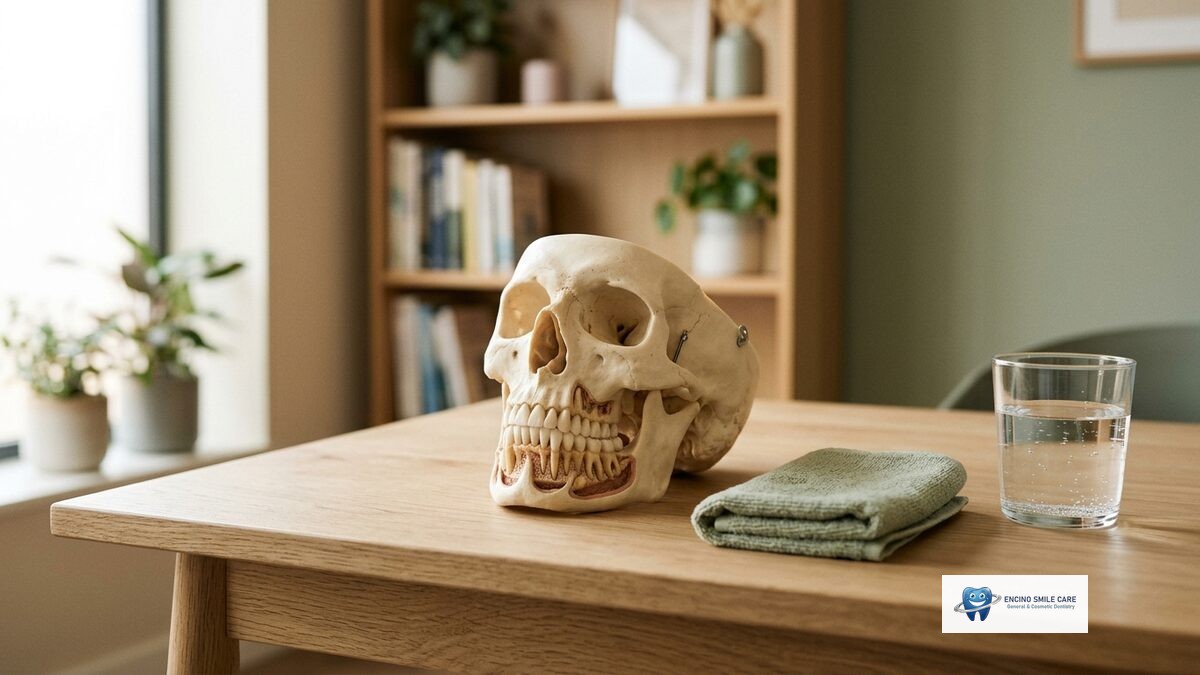
The temporomandibular joint connects the jawbone to the skull and does the work behind every bite, word, and yawn. When this joint and the muscles around it become irritated or painful, the result is often grouped under the term temporomandibular joint disorder, or TMD. Jaw pain is the most recognizable symptom, though the discomfort can show up in less obvious places, including the ears, temples, and the sides of the face.
TMJ disorders can affect people of any age, and the experience varies widely from one person to the next. For some the main issue is a stubborn ache; for others it is a joint that clicks or a jaw that feels tight first thing in the morning. Because the joint is involved in so many everyday movements, even mild dysfunction can make chewing, speaking, and sleeping less comfortable.
Common Causes of TMJ Jaw Pain and Clicking
Jaw pain rarely comes from a single source. In many cases several factors work together, which is part of what makes TMJ disorders tricky to pin down.
Muscle tension and overuse. The jaw muscles stay active throughout the day. Habits such as clenching, frequent gum chewing, or simply holding tension in the face can strain these muscles over time. Stress tends to intensify these patterns, leading to soreness, fatigue, and a reduced range of motion.
Teeth grinding and clenching. Bruxism, whether it happens during sleep or while awake, places repeated pressure on the jaw joints and surrounding muscles. Over time this can contribute to inflammation, muscle fatigue, and visible wear on the teeth.
Bite misalignment. When the upper and lower teeth do not meet evenly, the joints and muscles may compensate for the imbalance. That extra strain can produce discomfort during chewing, speaking, or yawning.
Joint irritation and injury. Trauma from an accident or a sports injury can damage the joint directly. Forms of arthritis, including osteoarthritis and rheumatoid arthritis, can also affect the joint and contribute to pain.
The clicking or popping many people notice when they open wide comes from the way the joint and its cushioning disc move together. On its own, an occasional click without pain is common and often not a cause for concern. It becomes more significant when it arrives alongside pain, limited movement, or a jaw that catches or locks.
Beyond jaw pain and clicking, TMJ disorders can show up as morning jaw stiffness, frequent headaches, soreness around the ears, and difficulty or discomfort when chewing. Because these symptoms overlap with other conditions, many people assume they are unrelated or something to simply live with.
Some of these symptoms can also stem from unrelated issues, such as an ear infection, a sinus problem, or a dental concern like an abscess. That overlap is one more reason a professional assessment is useful when symptoms stick around: it helps rule out other explanations rather than assuming the jaw joint is the only possible source.
For mild, recent symptoms, small adjustments are a reasonable first step. Easing the habits that overload the joint tends to help: becoming aware of daytime clenching, cutting back on gum chewing, and giving the jaw a rest from very hard or chewy foods. Because stress is such a common trigger, anything that lowers overall tension can reduce the clenching that feeds the cycle. These measures do not address an underlying structural problem, but they often take pressure off tired muscles while you decide whether an evaluation is needed.
It can help to notice when clenching tends to happen. Many people clamp down during focused work, while driving, or in response to tension, often without realizing it. A quick mental check during the day, keeping the teeth slightly apart and the jaw relaxed with the lips together, is a simple habit that costs nothing and may ease strain over time.
Over-the-counter pain relief is something many people reach for, and it can take the edge off temporarily; it is worth discussing recurring use with a professional rather than relying on it indefinitely.
When to Seek Care for Jaw Pain
Most minor episodes settle down. The reason to pay attention is that TMJ trouble left unaddressed can linger or gradually worsen. It is worth contacting a dentist when any of the following apply:
- Jaw pain that persists for more than a couple of weeks or keeps returning
- Pain that interferes with eating, speaking, or sleeping
- A jaw that locks, catches, or will not open or close fully
- Clicking or popping that comes with pain or swelling
- Frequent headaches, ear pain, or facial soreness without another clear explanation
- Noticeable changes in how your teeth fit together when you bite
A dental evaluation looks at the joint, the muscles, and the way your bite comes together to identify what is driving the symptoms. Pinpointing the cause matters because the approach for stress-related clenching differs from the approach for bite problems or joint changes. A dentist can also check for tooth wear and other clues that point toward grinding.
To identify what is going on, a dentist typically reviews your symptoms and history, examines the joint and muscles for tenderness, watches how far and how smoothly the jaw opens, and checks the bite and teeth for signs of grinding. Imaging is sometimes used to look at the joint more closely. The goal is to separate a passing muscle strain from a problem that needs ongoing attention.
Catching the problem earlier generally gives you more options and a simpler path, since muscle habits are often easier to interrupt before they become deeply set. Waiting until the joint is persistently painful or limited can make the picture more complicated to sort out.
At Encino Smile Care in Encino, Dr. Firouzeh Manesh and the team offer care for jaw and bite concerns and welcome patients for evaluation. The office also notes that it takes emergencies, so sudden, severe jaw pain or a jaw that will not move should not wait. Describing how long the pain has lasted, what makes it better or worse, and whether the jaw locks gives the team a useful starting point. If you are unsure whether your symptoms warrant a visit, calling the office at (818) 788-6684 is a straightforward way to describe what you are experiencing and get guidance.
This article is informational and is not medical advice. Treatment options should always be made in consultation with a qualified dentist.